
Unmissable: 10 Days in a Madhouse
Review
Hello Schmop-Tops!
Some of you may know who Nellie Bly was. She was a key figure in mental health reforms for women. A pretty well-known journalist, Bly infiltrated Blackwell’s Asylum in New York by pretending to be insane. Not a single professional in the Asylum was able to tell she was faking it. You would think that meant Bly was a phenomenal actor as well. That is not the case — turns out, most of the women were not actually “mad”, but rather victims of grief, physical or chronic illness, or just an immigrant.
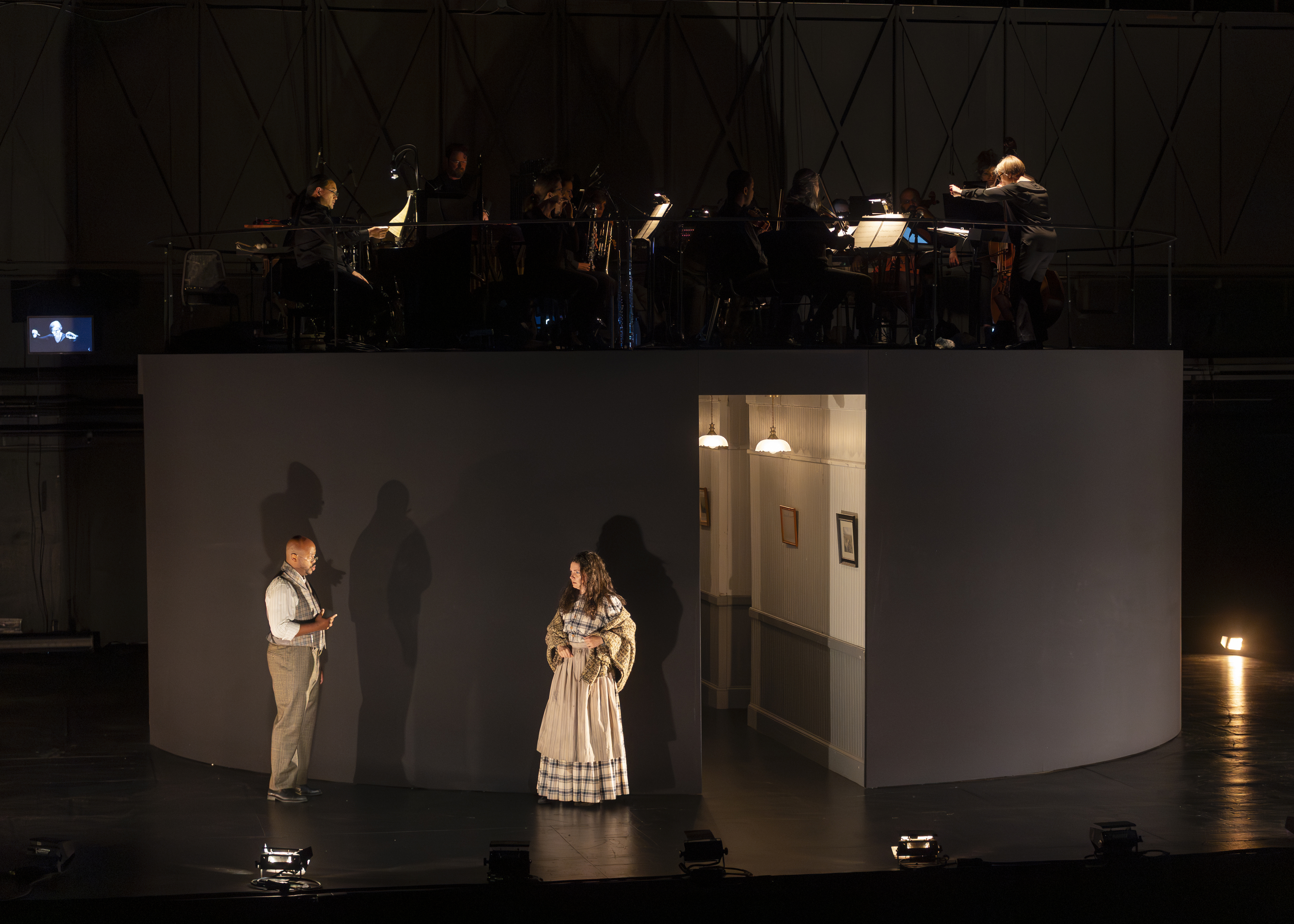
This opera, written by Rene Orth with a libretto by Hannah Moscovitch, tells Bly’s story through her interactions with fellow inmates, the nursing staff, and her psychiatrist. Directed by Joanna Settle and cleverly constructed on a reverse timeline, we follow Nellie from the end of her sojourn — where she said, “the conditions there would drive a sane person mad” — to her intake interview, and we see clearly the difference between her feigned madness and the torment she was suffering due to the conditions.
Orth’s decision to divide the music’s soundscapes to help depict the differences in the “same state” and the “mad state” also made an indelible impact. One one end, the perceived “sane” world was a much more “classical” vibe. Standard orchestrations, harmonic movements, etc., gave the audience a familiar feeling, which contrasted with the EDM-techno scoring for any madness flare-ups (for lack of a better term). It was alarming and jarring in the best way possible. Conductor Sandra Horst led the score beautifully, and masterfully handled the transitions between the two (which sometimes found the live orchestra overlaying pre-recorded tracks). I’m really enjoying seeing Horst on the podium more and more these days. She’s a sensitive conductor whose intimate knowledge of the demands on the singer are ever present in her baton.
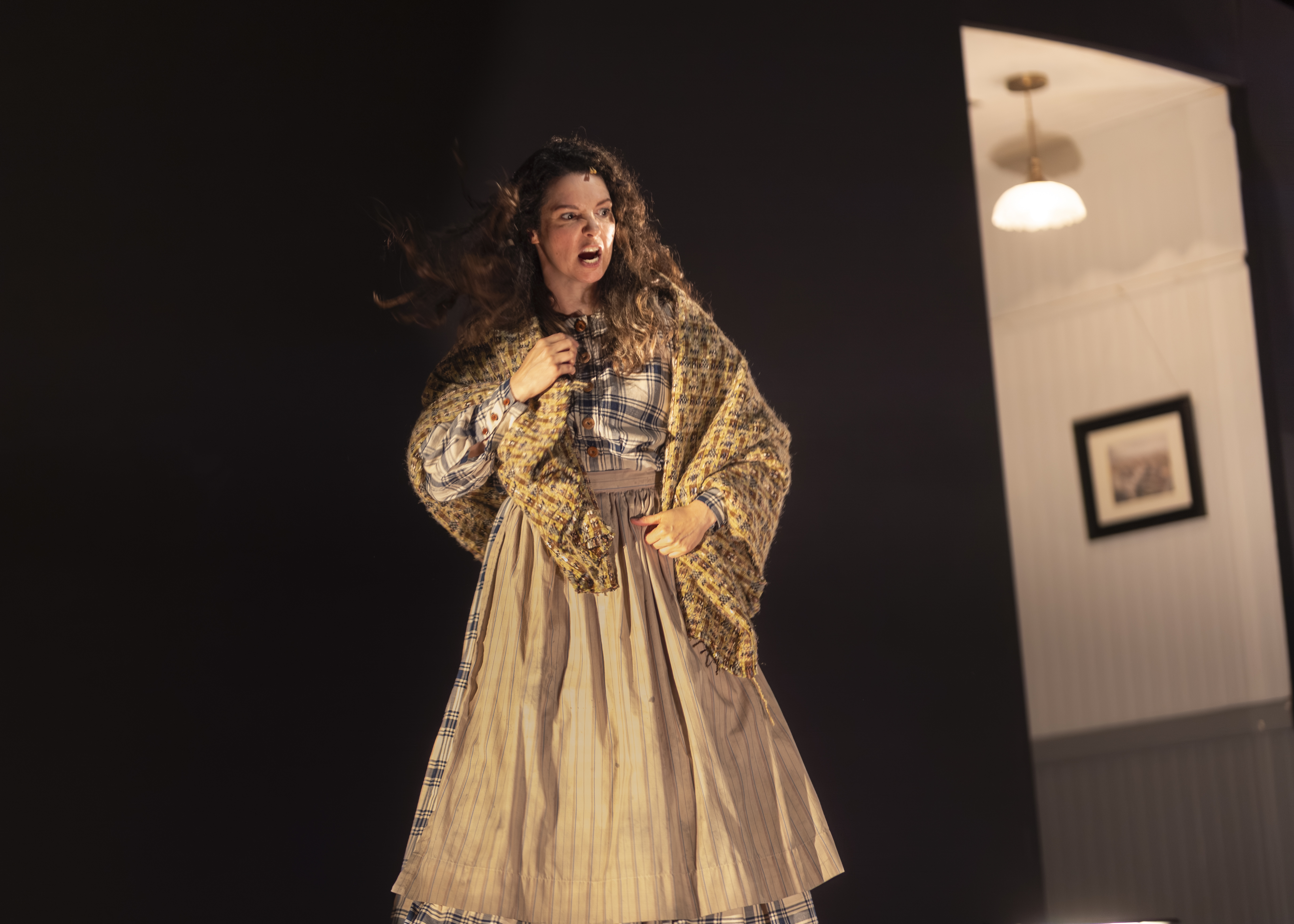
This show calls for a tour-de-force performance from Nellie, and boy did we get one in Mireille Asselin. Her smooth, clear, soprano handled the tricky score well. Not only an incredible vocalist, Asselin’s acting is also top-tier. As an audience member, you are drawn in by her immediately and the pathos she stirs continues to grow as we follow her reverse journey. The Nellie we meet amongst the fellow inmates is compassionate, knowledgeable, spunky, clever, and believe it or not at times, funny.
As Doctor Josiah Blackwell, Jorell Williams was astonishing. Playing his part of a male doctor who has little-to-no understanding of the female psyche with a cool, calm, collected confidence of every mediocre man who’s tried to tell a woman how to do her job. Given, in my opinion, the hardest vocal lines in the show, we get to hear every extent of Williams’s massive range. Every note well placed, every consonant crisp, and every intention clear. I don’t know if we’re supposed to hate the man, or just be supremely frustrated by him, but I was definitely a pleasing mixture of both.
As the Nurse and Matron we have Lauren Pearl. They’re one of my favourite artists as they’re always pushing envelopes and boundaries with their performances (remember that time they scaled the wall at the RCM for a whole opera?) not to mention in the line of singing, The Nurse was an ever-present spectre in the Asylum. Whether it was assisting the doctor, or monitoring the daily activities of the inmates, or teaching them a hymn there was always a predatory, condescending air. Leading the cast as a movement coach as well, Pearl’s physical use of their body is unrestrained and poetic. With the lack of sung dialogue for the character, the physicality told their very layered story.
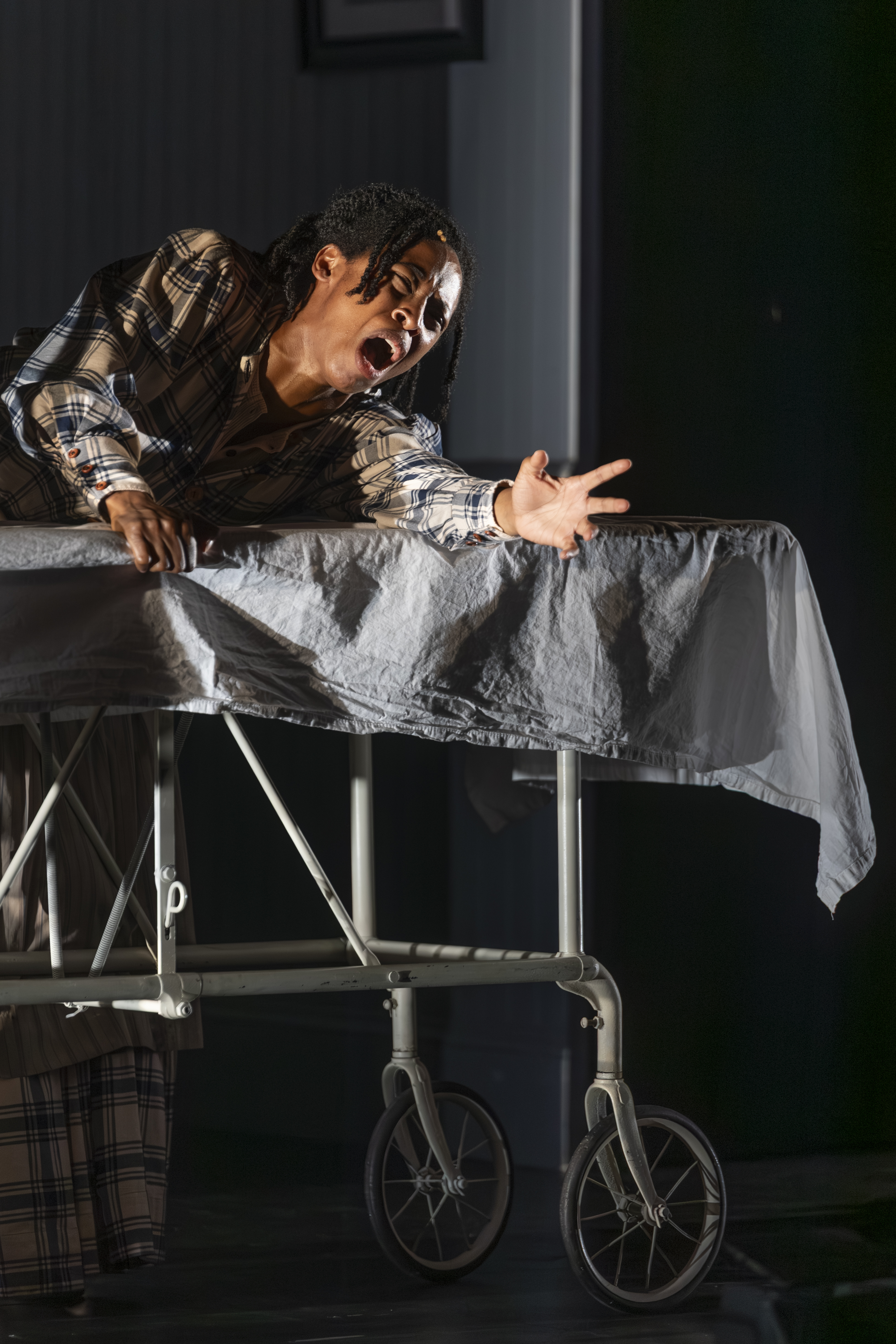
As Nellie’s inmate friend Lizzie, Taylor-Alexis DuPont was likely the highlight of the night for me. Vocally, this is an instrument for the ages. Rich and deep, full and clear, she was a perfect foil against Asselin’s Bly. Lizzie is used as the main example to show how the Asylum doesn’t actually care if the women are sane or not. After losing her baby and the contracting typhus, the tragedy in Lizzie’s story drips through every line - even the ones where she’s her most lucid self. She perfectly highlights the need then to actually listen to the women’s complaints - an issue that still dogs women today as they seek physical and mental health support. We’ve come a long way, but we’re nowhere near close to where we need to be regarding equality for women’s health.
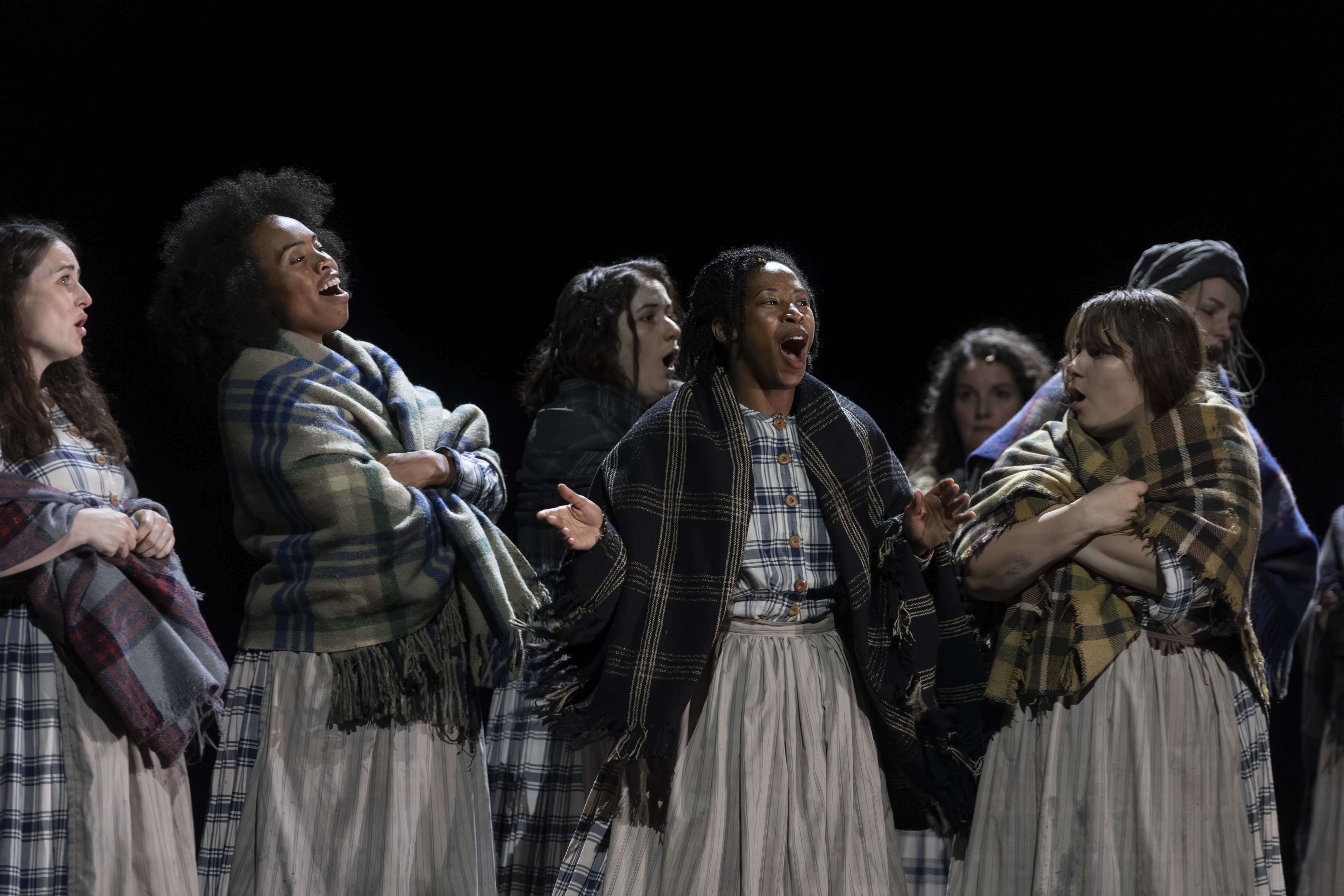
Joining the soli was an asylum full of “mad women” who functioned in an almost Greek chorus fashion. I found this very effective, and each one’s depiction of their “madness” was unique, sensitive , and clearly thought out. The ensemble singing was incredible. Very tone-clustery for most of it, it gave me hints of composer Knut Nystedt, who wrote one of the most beautiful and difficult pieces I’ve ever sung. I tip my hat to this ensemble. Each and every one was a star.
The set design by Andrew Lieberman was pretty neat. A tall, free-standing, wide cylinder or silo centre stage had the conductor and orchestra on top, above the action - a trend I’ve noticed on a few productions this spring. Underneath, a clinical-looking hallway ran through the centre of the silo and sparse lighting created a very unwelcoming aura to the Asylum, which would only get alleviated with strategic lighting changes to warmer hues - designed by one of the best in the biz right now, Bonnie Beecher. Ásta Fogstetter and Avery Reed’s costume design was precise to the times, a special highlight being Nellie’s dress during the epilogue where she’s begging for change and help for these women. A golden overlay, sat atop the simple plaid dress she wore as an inmate, was a neat bit of storytelling all on its own. It was a very clever design from the whole team.
While I’m usually not the hugest fan of hearing music at the Bluma Appel Theatre, as it’s much more designed for the spoken voice, I will commend the company on the decision mic the singers. With the introduction of digital and recorded underscoring, it keeps all the musicians and singers on the same aural plane and makes it easier on the listener as a whole.
10 Days in A Madhouse is an amazing work that passes the Bechdel test. It’s a co-pro with Opera Philadelphia, Canadian Opera Company and Luminato Festival (with support from TO Live) and runs until June 21 at the Bluma Appel theatre. Tickets are scarce (as they should be) but if you can nab one. Go.
Do. Not. Miss. This.
Comments