
Hildegard: a composer trapped
Review
Sarah Kirkland Snider, known for critically acclaimed works in other musical genres, had the New York premiere of her first (and so far, only) opera, Hildegard, presented as part of Beth Morrison’s Prototype Festival (celebrating its 20th anniversary this year). Ms. Snider is a truly original artist who has written several lovely song cycles (some with indie-rock overtones) as well as chamber and orchestral works (with definite classical influence) but all that seems to have disappeared here amidst three hours of modernity that often drifts over into monotony.
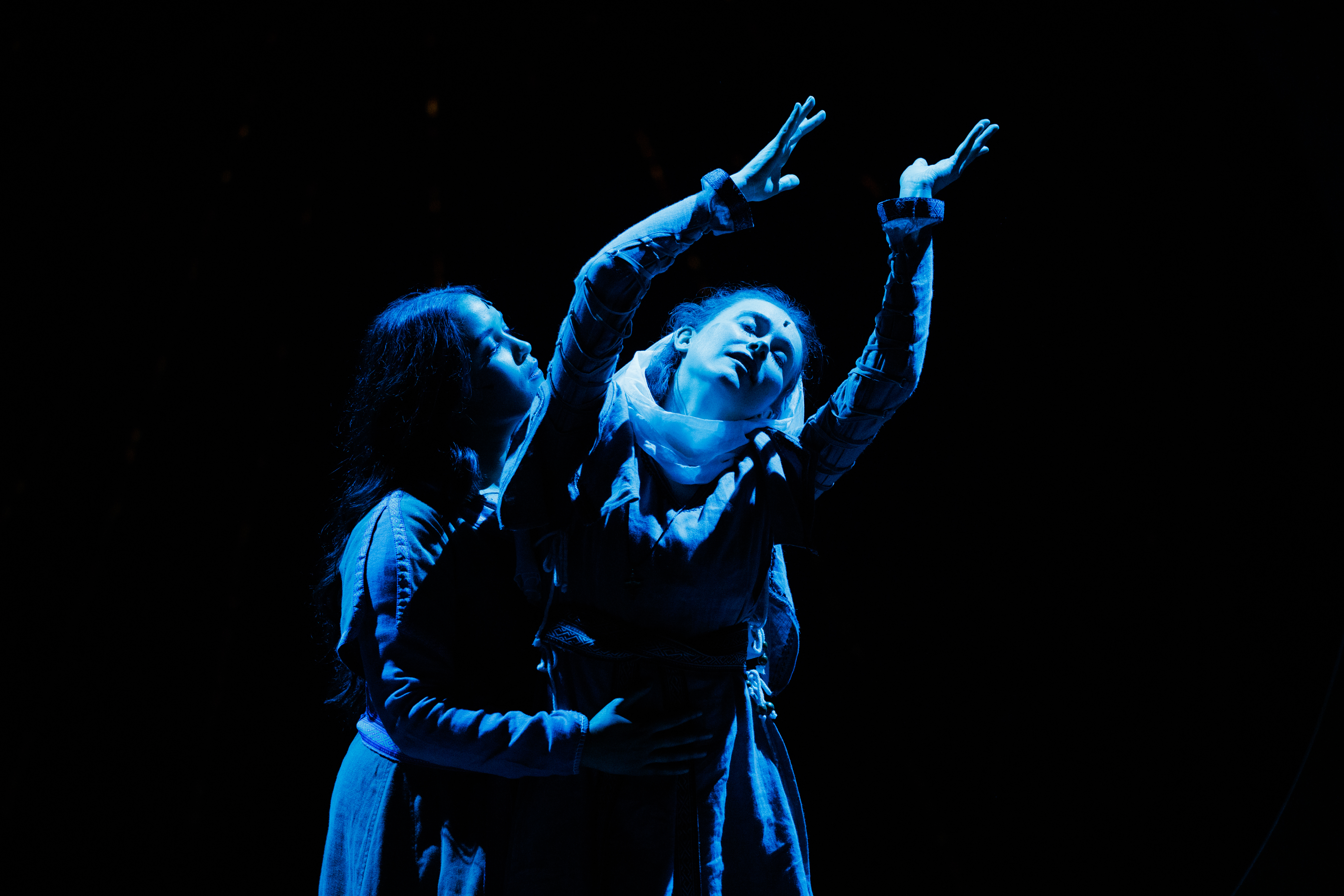
Needing no licensing, other than a great deal of the poetic kind, the opera is very loosely based on the real-life Hildegard of Bingen. Briefly – because fiction here is paramount – Hildegard was a famous and influential medieval nun who composed music, wrote books (as well as hundreds of letters) and had spiritual visions - all radical behavior for a woman in 1150 C.E. The historical Hildegard also defied Church hierarchy, fighting her way for independence all the way up to the Pope himself who, surprisingly for the time, embraced rather than excommunicated her.
With this as Ms. Snider’s inspiration, the composer appears to be trapped, musically, by her subject matter. Ms. Snider limits herself to what sounds like a nod to the music of Hildegard and her contemporaries, while also vigorously nodding to the avant-garde. There are offstage monks who deliver recitations of more traditional-sounding prayers (“Kyrie eleison”) while on stage “Angels” - sometimes in duets, sometimes in trios - offer melismatic chanting out of unison, in contrast to the monks. The soaring, ethereal notes of the “Angels” may mesmerize an audience for a while - indeed, the sound created by the “Angels” is a welcome break from the long passages of recitative with mundane sung-through dialogue - but the “Angels” and their sound wear out their welcome. All of this is mic’d with a lot of tiresome reverb to sound as if they are singing in a cavernous monastery, or what we imagine is coming to us from a distant orb in the heavens.
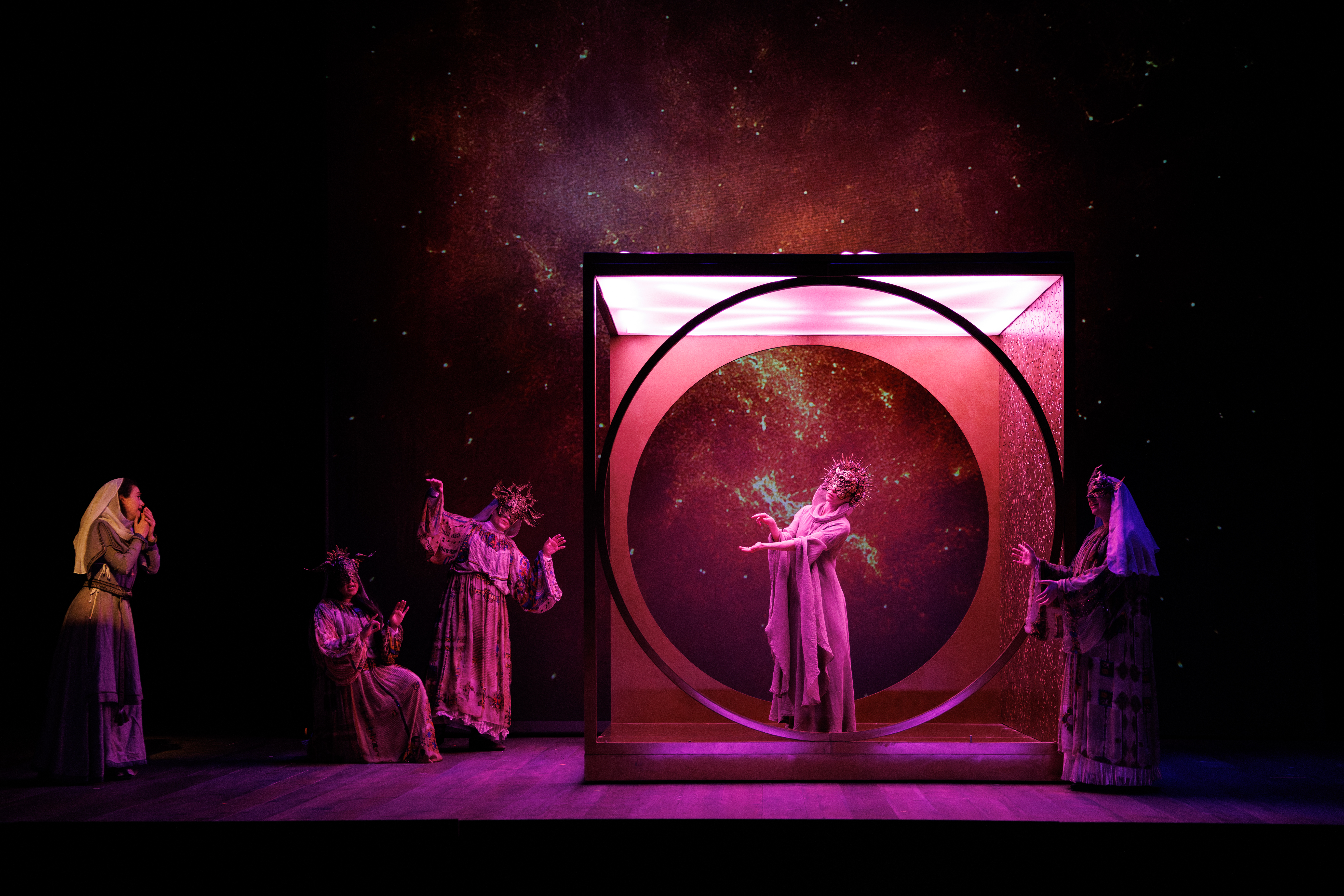
Ms. Snider (who also serves as her own librettist) spends a lot of time focused on Hildegard’s otherworldly visions, which are so profound that they cause the character emotional and physical pain. It’s no surprise that she struggles to understand the meaning of the visions, which, as written, are a muddled potpourri of symbolism. Hildegard, on the other hand, has a very clear philosophy of life - that there is a “light” within us all (our true selves) – and that light will, in turn, draw us toward the “ultimate light” - the source of all things.
In the end, Hildegard refuses to be undone by patriarchal church politics, and she even allows herself to fall in love with a fellow nun named Richardis Von Stade. Hildegard finally understands the meaning of her visions, which seem to be an affirmation of what she’s believed all along: that she needed to be true to her inner self. So what did she come to understand that she didn’t already know at the beginning of the evening?
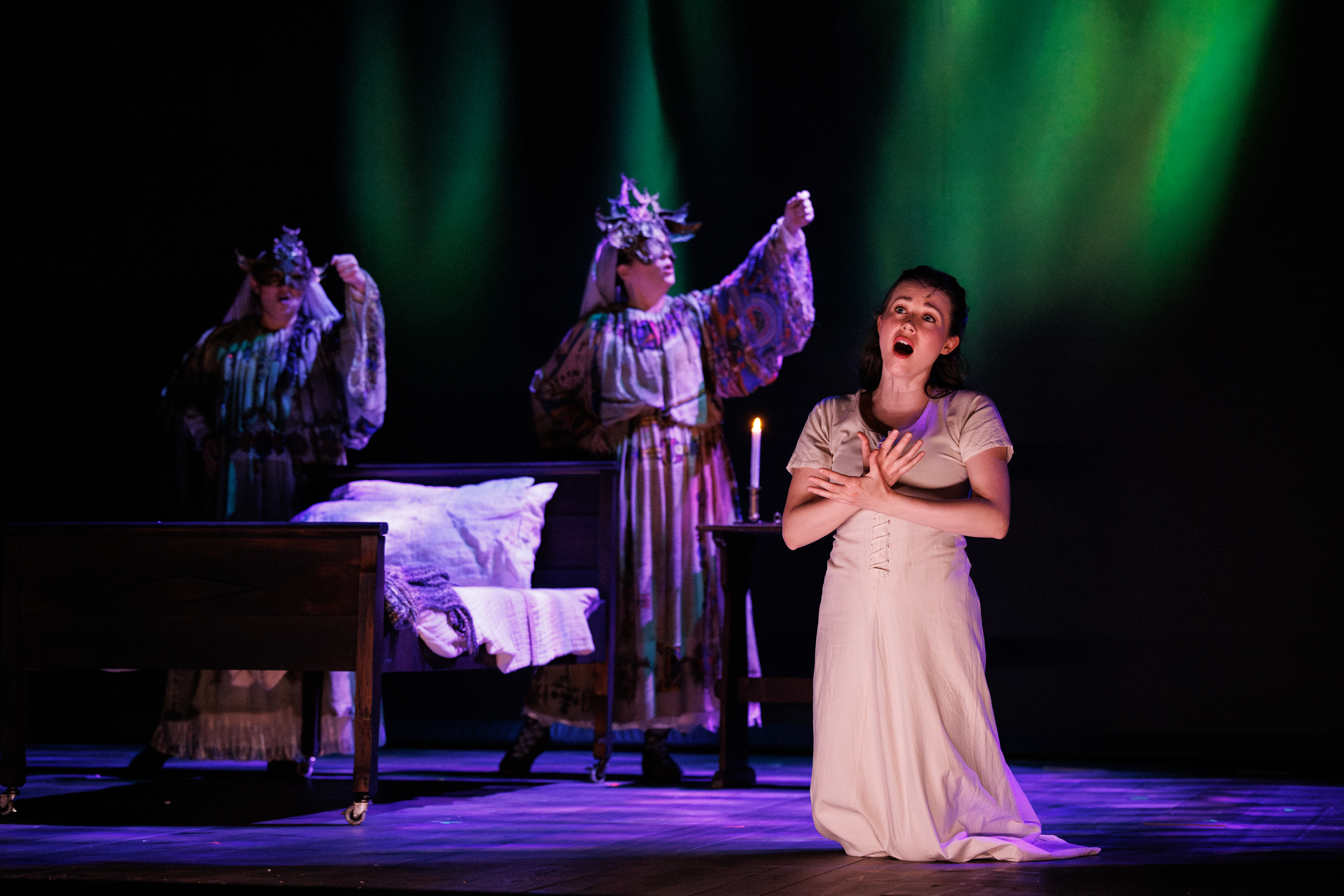
The singers do a tremendous job of selling all this to the audience, with passionate, believable and committed performances. Soprano Nola Richardson brings the 900 year-old Hildegard to life, radiating strength, compassion and underlying velvet steel in her relationships with people, while exhibiting a great deal of vulnerability when faced with spiritual powers. Her satiny voice blends beautifully in duets with soprano Mikaela Bennett (as Richardis) who has an earthier, full-bodied tone. Ms. Bennett, also an excellent actress as well as singer, gets to play a large palette of emotions.
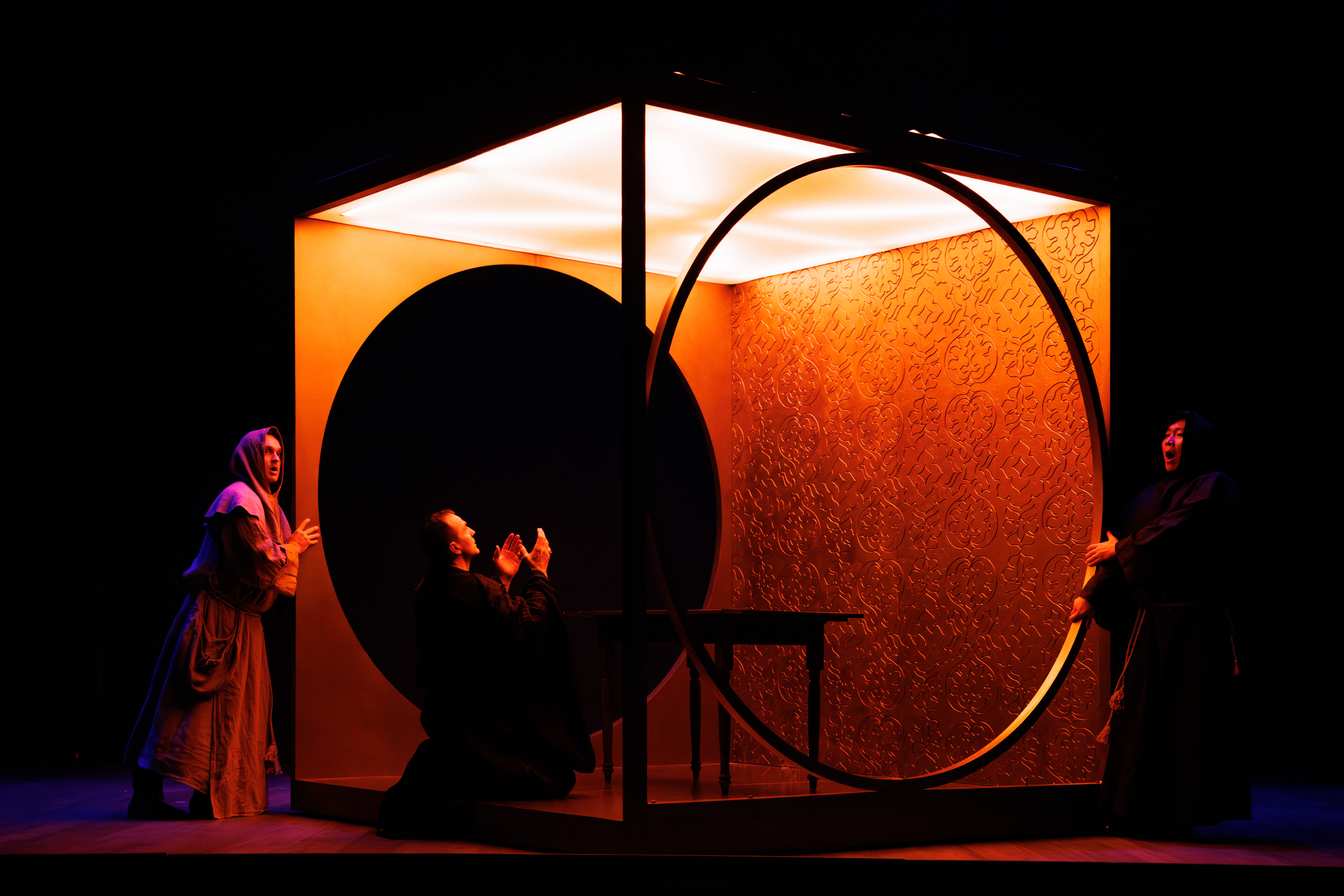
Baritone David Adam Moore, is a vocal and acting powerhouse as the villainous Abbot Cuno, whose concern for spiritual matters is at the bottom of his list of priorities. He’s clearly the bad guy who even wears a black hat, albeit a black zucchetto. Roy Hage’s dulcet tenor is perfect for the words of support and hope he offers to Hildegard as her friend Volmar. Mezzo Blythe Gaissert and soprano Raha Mirzadegan shine in multiple roles including the aforementioned Angels.
Who needs a full orchestra when you have the mighty nine-piece Novus Ensemble in the pit, outstanding as always? As Ms. Snider has demonstrated in other works, she knows how to write memorable orchestral music, with a special mention here for what she has composed for the harp (exquisitely realized by harpist Tomina Parvanova Lyden).
Director Elkhanah Pulitzer and choreographer Laurel Jenkins don’t offer much help in the way of explanations for the audience. There are a lot of distracting set changes, some performed by inexplicable “bird-man” characters with raven-like heads. There is a great deal of extraneous movement throughout – including an overly long balletic finale. Much of it is pretty to behold but it all feels like movement for its own sake, outside the story rather than illuminating it from within.
Comments