
Handel's Hercules marches solemnly into Carnegie Hall
Review
Last year Harry Bicket and his English Consort brought a sparkling concert performance of Handel’s Giulio Cesare in Egitto to town in a performance marked as much by the aforementioned sparkle as superb musicianship. This year the composer’s Hercules came to call in a production that reveled in its solemnity.
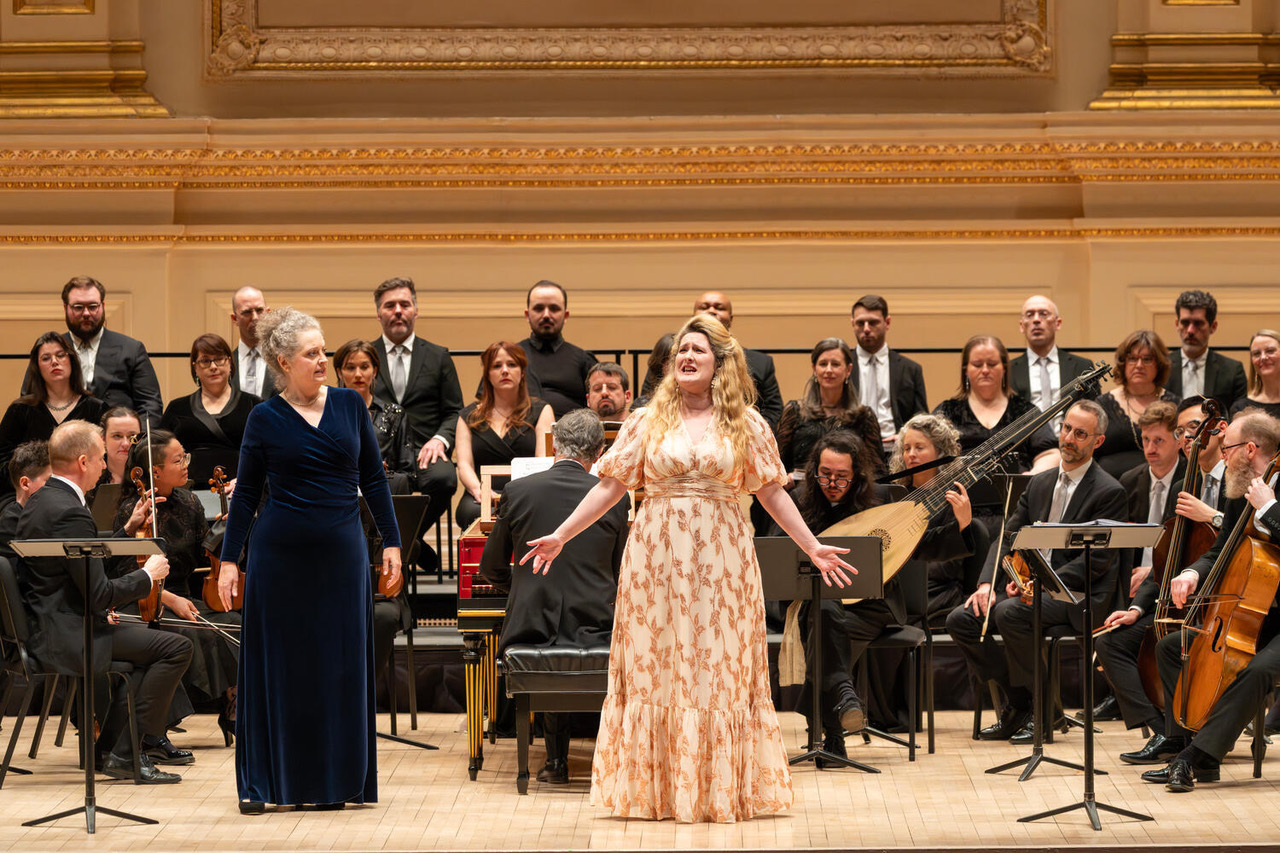
This is not necessarily a fault; the oratorio was originally billed as a tragedy. Hercules dies but goes off to fraternize with his fellow gods. He leaves behind his wife, Dejanira (really the work’s main character) who gains insight through suffering and a son, Hyllus who finds true love with Iole, the princess conquered by Hercules. As tragedies go, this one could be worse and leaves a bit of room for levity.
But the solemnity remains unaccompanied and undermined the performances of two otherwise excellent singers; mezzo-soprano Ann Hallenberg and Hilary Cronin who, respectively, sing Dejanira and Iole. Both negotiated their da capo arias and recitatives with elegance and unquestionable vocal agility but appeared to be holding back on the power needed to confirm their theatrical impact.
Cronin, however, put aside her reticence to burn though the fast-paced Act II aria, “Ah! Think what ills the jealous prove” with power and delicacy. Here Iole attempts to convince Dejanira that she is not her husband’s lover and in doing so foretells the madness that will soon consume this distraught wife.
Hallenberg breaks through in Dejanira’s mad scene, for which, with a rare visual touch, her otherwise prim hair is disheveled. Handel created a scene that rivaled anything being sung on the bel canto stage and Hallenberg exposed its raw, mood-shifting and tempo-changing effect on a once diligent mind gone mad with guilt. Such guilt stems from her gift to Hercules of a blood- stained shirt, once worn by the centaur Nessus, thinking it would ensure her husband’s faithfulness but instead caused his agonizing death.
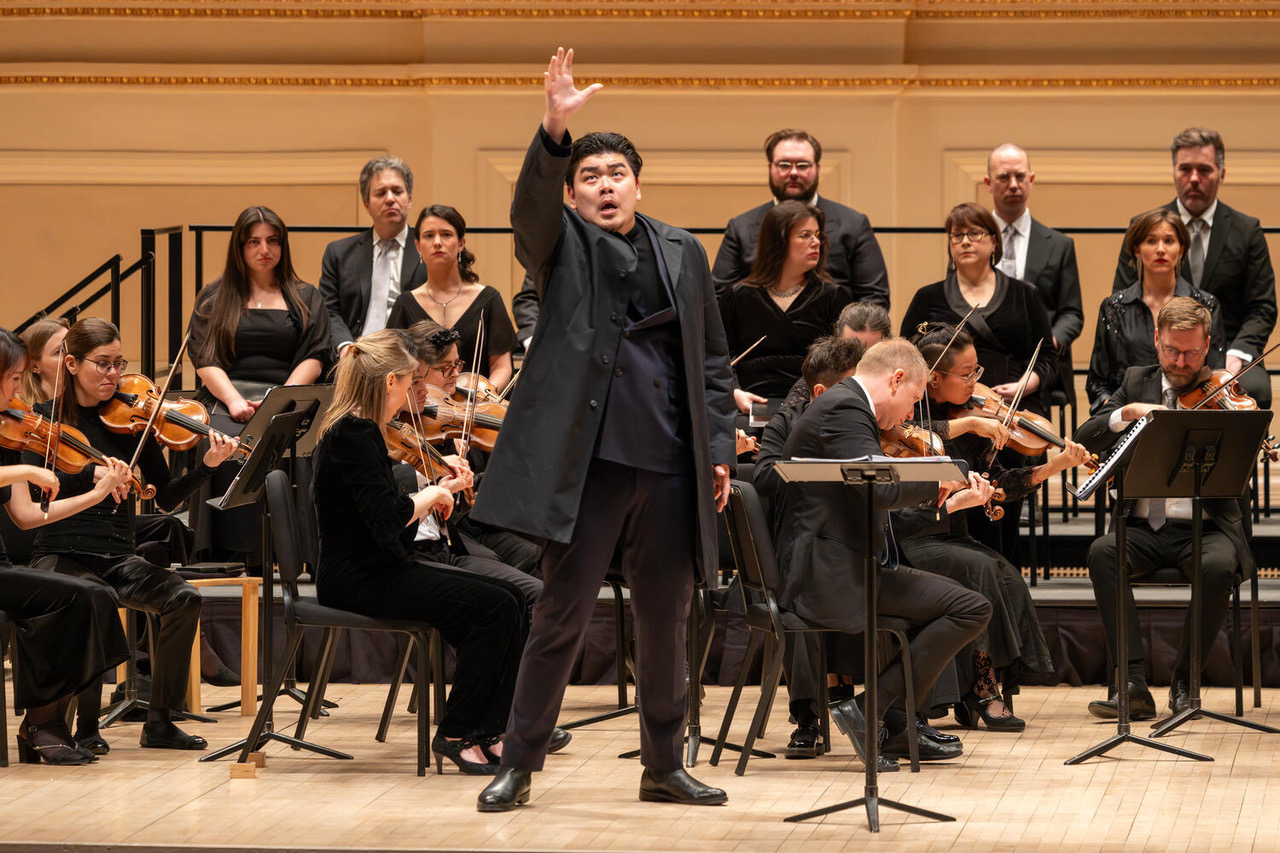
As for Hercules, quite frankly he is something of a dolt. William Guanbo Su, his resonant bass-baritone booming with conquering heroism or indignant rage, effectively evoked both. General bombast notwithstanding, he brought pathos and dignity at the moment of his death. Hyllus, sung by tenor, David Portillo, provided high energy and fortitude to the role of a dutiful son with an eye on Iole.
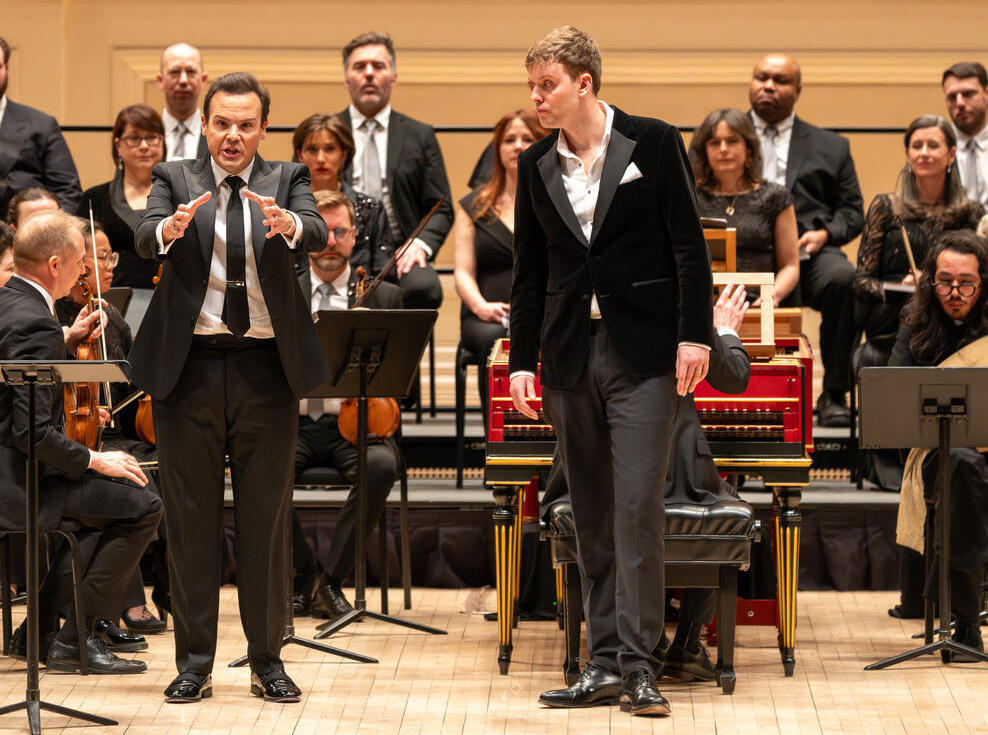
Countertenor, Alexander Chance as Lichas was surprisingly ambiguous for a herald. Bringing good news and bad, and describing the death of Hercules in ghastly detail, Lichas seemed to remain above the fracas. Or did he? Chance’s fine and agile interpretation suggested where this concert production might have gone had it not settled on such solemnity.
Elevating the performance above its solemn confines was the Clarion Choir. This New York-based vocal ensemble, under the direction of Steven Fox and recruited by Bicket for Hercules, possesses seemingly preternatural unity and flat-out gorgeous articulation. Whether in the reverence and magnificence of “O, filial piety” or the rhythmic intricacies of “Jealousy! Infernal pest” in which it functions as a Greek Chorus, the Clarion Choir astounds.
This is the English Consort after all. Its impeccable musicianship and Bicket’s enlightened conducting are not to be taken for granted. We expect perfection and for the most part receive it. On the cultural horizon there are events we look forward to each year. Sparkling or solemn, the English Concert is one of them.
Comments