
COC Barber of Seville chock full of debuts
Review
Hello, Schmop-Tops!
Miss me?
I know it’s been a while, but I’m back at it: I caught opening night of the Canadian Opera Company’s revival of Rossini’s Il barbiere di Siviglia (The Barber of Seville).
Directed by Joan Font and last seen at the COC in 2020, this is a co-production with Houston Grand Opera, Opéra National de Bordeaux, and Opera Australia and sets the familiar scene in, well, Seville – but the era seems hard to nail down.
Conducted by Daniela Candillari in her COC debut, the COC Orchestra played brilliantly and gave us a stunning rendition of one of the most recognized overtures in the canon. Her tempi throughout the piece were lively without getting out of control. There were balance issues at times, especially when singers were in their mid-ranges, but overall it was a great night in the pit at the Four Seasons Centre for the Arts. Shoutout to continuo Christopher Bagan!
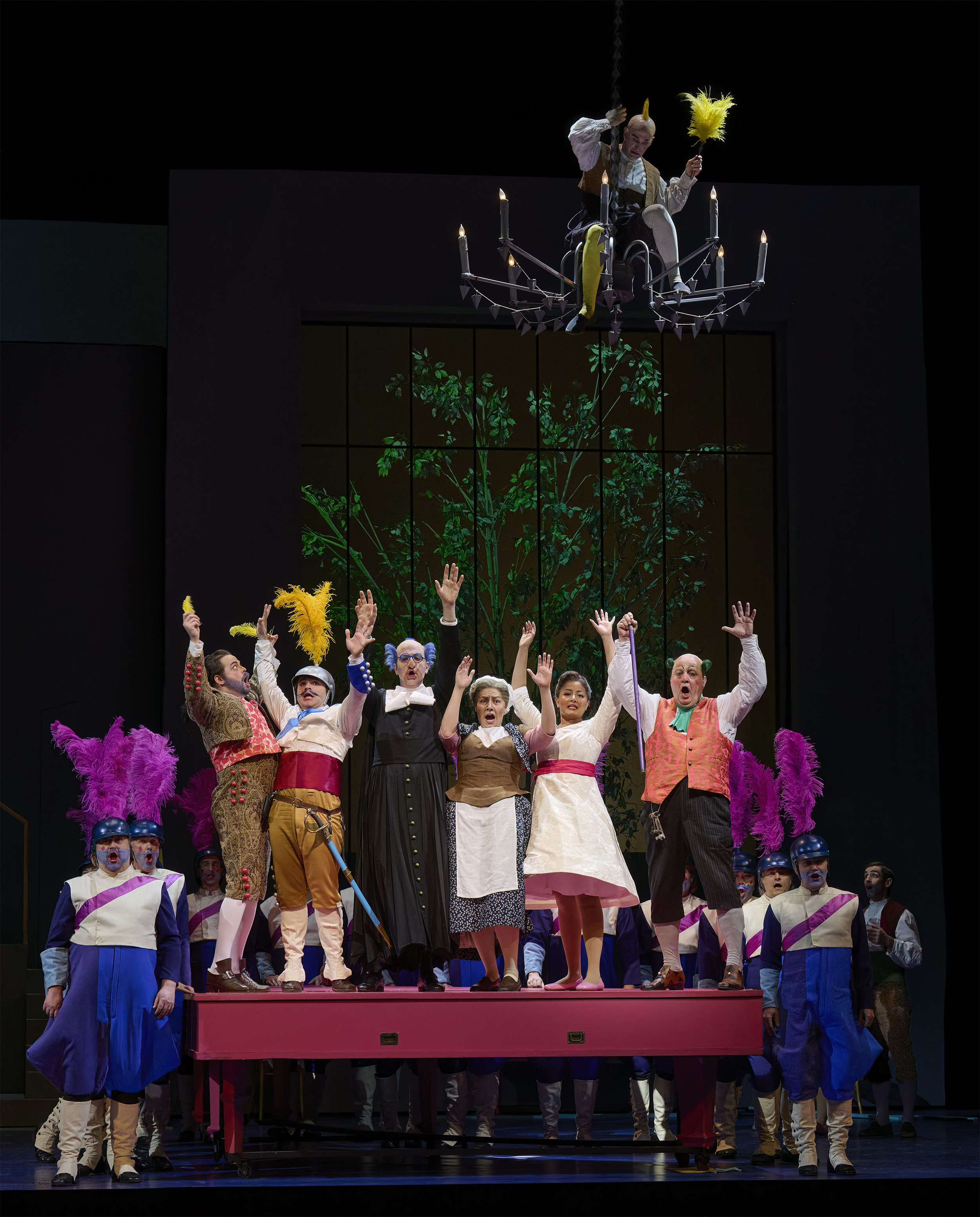
The story, for those new and who need a refresher, is one of the staples of the bel canto genre. Well, for a comedy…
TL;DR Boy loves girl. Girl loves boy. Boy wants to know she loves him for him, not his wallet. Boy employs services of person to get girl. Girl may or may not make it easier. Old guy tries to stop it (which may or may not involve money) or marry girl himself. Hijinks ensue. Some slash everyone gets married.
It was the “first night” out for a few people here in Toronto as well. Making COC debuts tonight are our Figaro, both Almavivas (Pietro Adaini takes over on February 17 until the 21st), Rosina, and Berta.
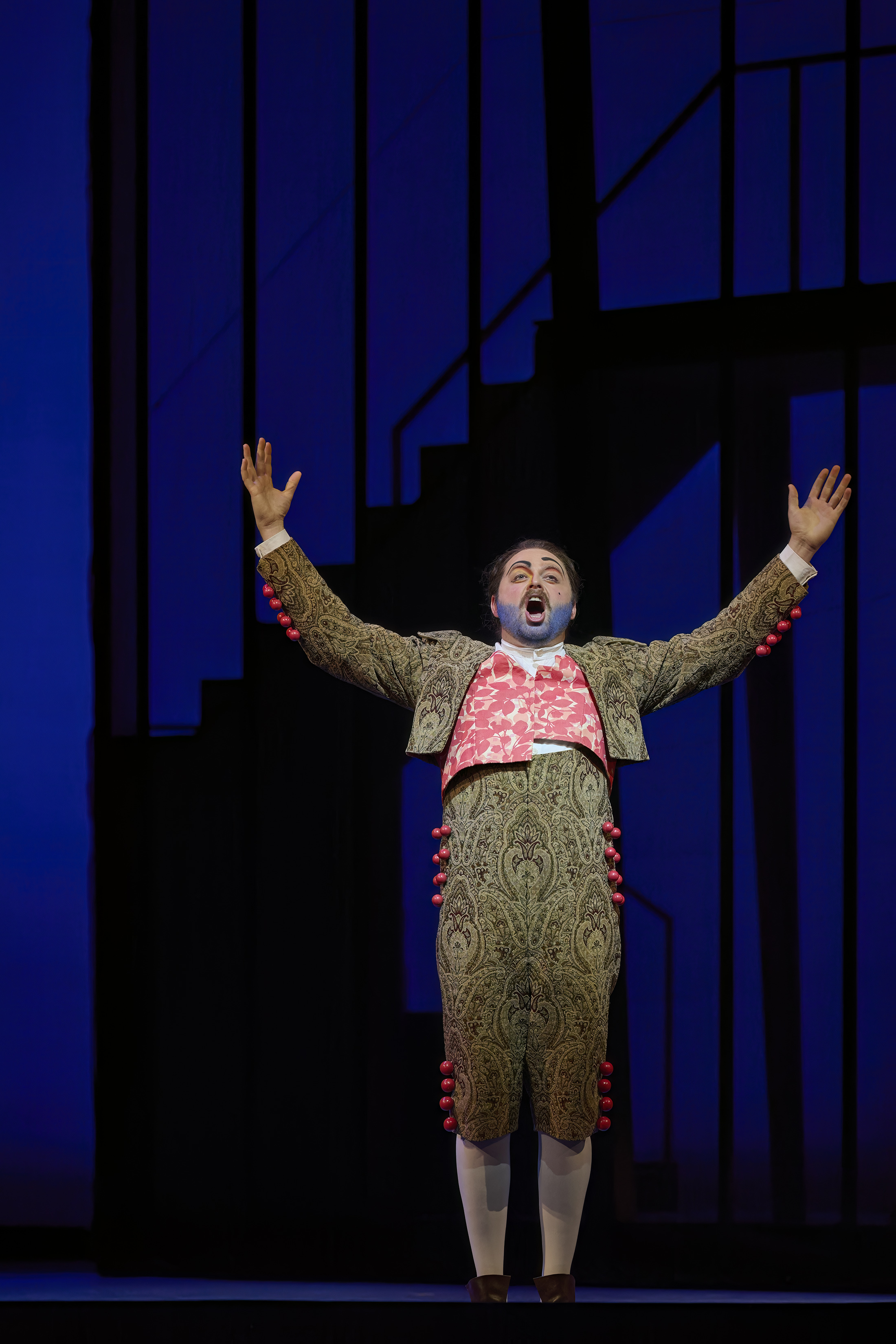
In the title role, Luke Sutliff as Figaro is every bit the loveable cur you want him to be. He sang the role beautifully with a finessed use of dynamics and an unshakable line through all his melismas and coloratura. I did think it was interesting that once he meets with Almaviva and they begin the schemes to woo Rosina, Figaro was less in charge of the plot and more of a tool used by the two lovers. It’s an interesting choice, but after you set someone up with an aria like “Largo al factotum” - he should really be the one factoting. (Is that the verb?)
Dave Monaco as Almaviva had a bit of a mixed night for me. Vocally, he was spot-on – a beautiful Count-Lindoro-Alonso whose musical choices lent a very authentic Spanish flair to them. The flourishes in his melismas evoked a sense of flamenco which is there in the score, but rarely highlighted in such a definitive way. It was a refreshing take on the vocal lines that are not for the faint of heart. I did feel as though he left Almaviva while on stage a few times during some of the (ridiculously) difficult passages and it felt somewhat like a masterclass presentation. An excellent one that sounded gorgeous, but wasn’t theatre? There were moments where I felt the physical demands of the staging may have been a concern. When he did let loose with the physicality, he was the funniest person on stage.
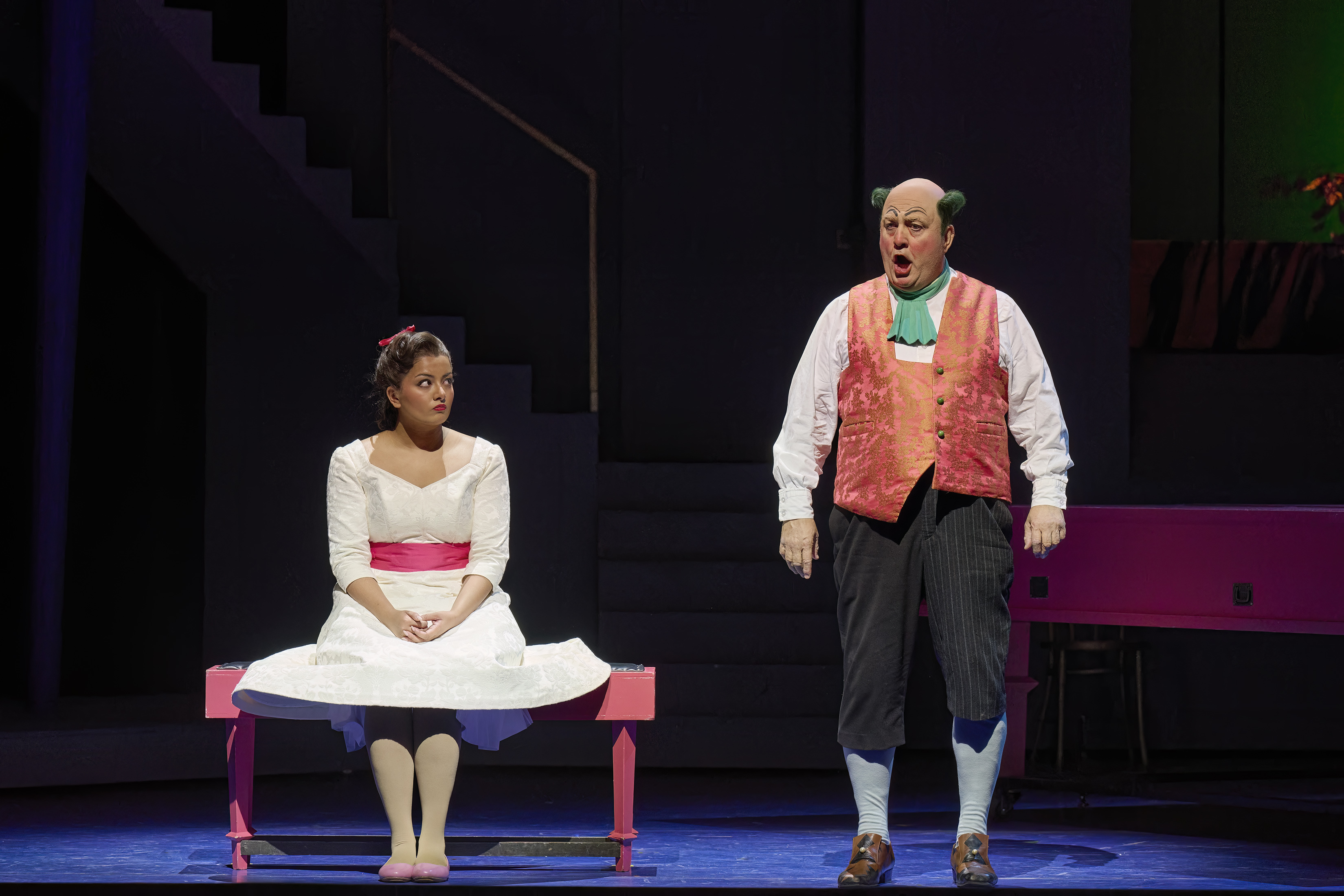
Deepa Johnny brought us a Rosina that was spunky, charismatic, and quite funny. At no time was there even the slightest hint of the operatic damsel in distress thing, but at every moment was a woman with agency and wit. Her singing was some of the finest bel canto I’ve heard in a while. Clear, even, nuanced, and with exquisite diction (this was actually a highlight for the whole production.) Her chemistry with both Almaviva and Figaro was exciting and brought a real joie-de-vivre to the trio as a whole. Her interactions with Bartolo were hilarious and their dynamic seemed very authentic. Johnny is an excellent actor who seemed very comfortable whenever her character needed to take the reins of the pace.
Serving up the best of buffo in Dr. Bartolo, Renato Girolami was a delight. His immersion into this quasi comedia-del-arte aesthetic to me felt the most organic. What I really like about a great opera singer is when I forget that they’re singing. Not because of lack of anything, but because it’s so well done, my suspension of disbelief doesn’t have to work as hard. Girolami did just that. A phenomenal singer with an ease and presence on stage, his patter singing is something to behold. As a bit of a patter guy myself, I empathize with how incredibly difficult his passages are and was astounded with every clearly enunciated syllable that flew by.
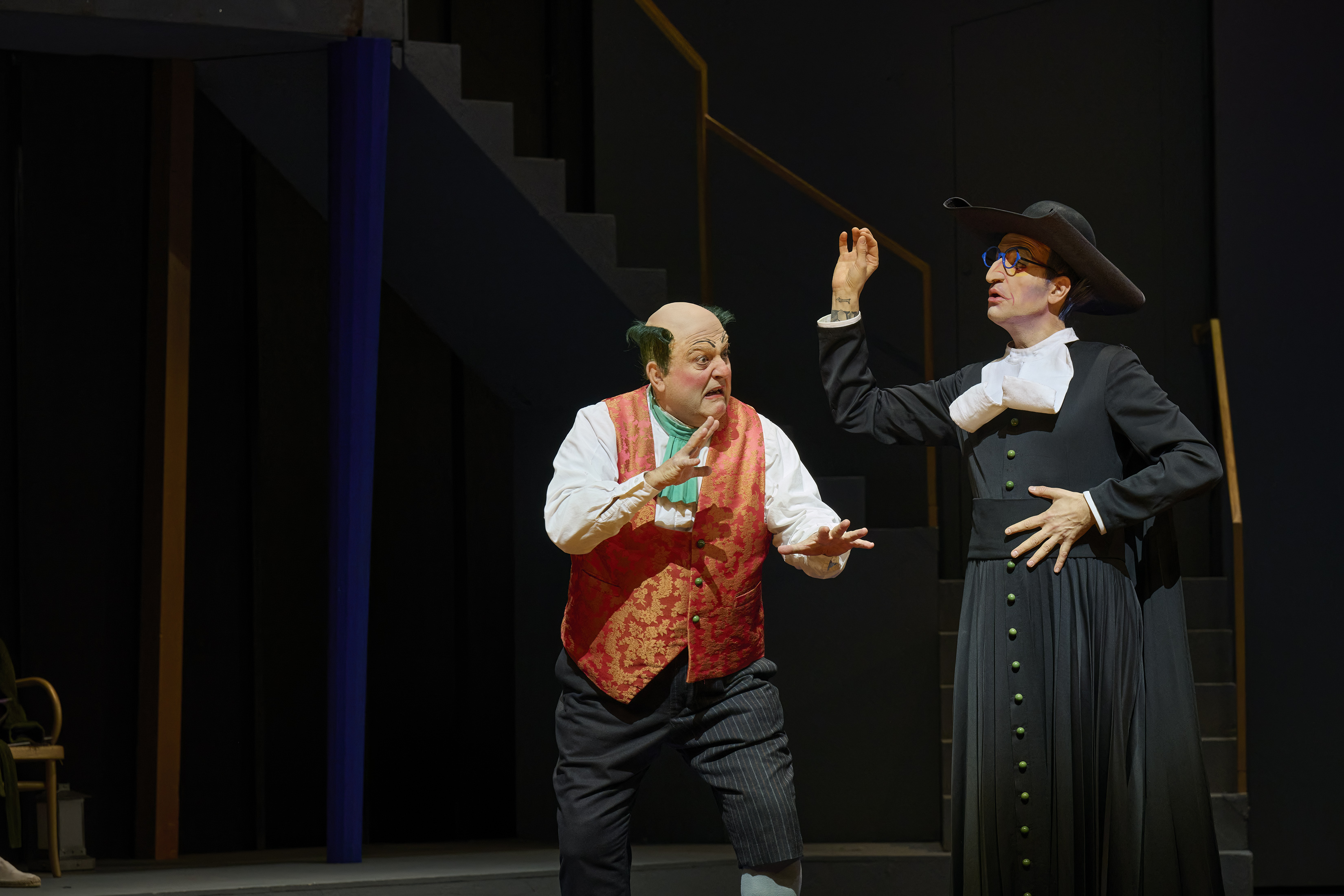
Our Basilio, Luca Pisaroni, was not to be left in the dust by any means. His “La calunnia” was really fun and he, like Girolami, felt right at home in this broad presentational style. Playing Rosina’s maid, COC Ensemble Studio Member Ariana Maubach as Berta sang with a full, deep, chocolatey tone that was in a fair bit of contrast with the overall brighter tones on the stage. This gave a thicker, warmer feeling when she joined in on the ensemble pieces. Pulling double duty Nathan Keoughan’s Fiorello was very effective and fun to watch. He doesn’t have much to say, but that doesn’t mean he doesn’t have much to do; as the Officer showed a great ability to switch roles into a much broader, cliché (not in a bad way) portrayal.
Lighting designer Mikael Kangas brought to light an almost two-dimensional animated world for these characters to live in. Their use of colour and shadow played very well with set and costume designer Joan Guillién’s looks, which were visually very appealing, even if somewhat confusing. There was absolutely a very cartoon-like vibe to the look as a whole. The set is very much reminiscent of old Warner Brothers Animated classics like (shall I say it?) “The Rabbit of Seville.”
Excellent choices like the massively oversized clavichord for Rosina’s lesson which later becomes a table and a dais and a platform. My only question is “When are we?” We have explicit references to a host of time periods from the 15th century to what looks like a quote from the original West Side Story film. Maybe it was leaning hard into the cartoon aesthetic of the whole show where time is nothing but a construct. Maybe it’s meant to be out of time. It looked great, though.
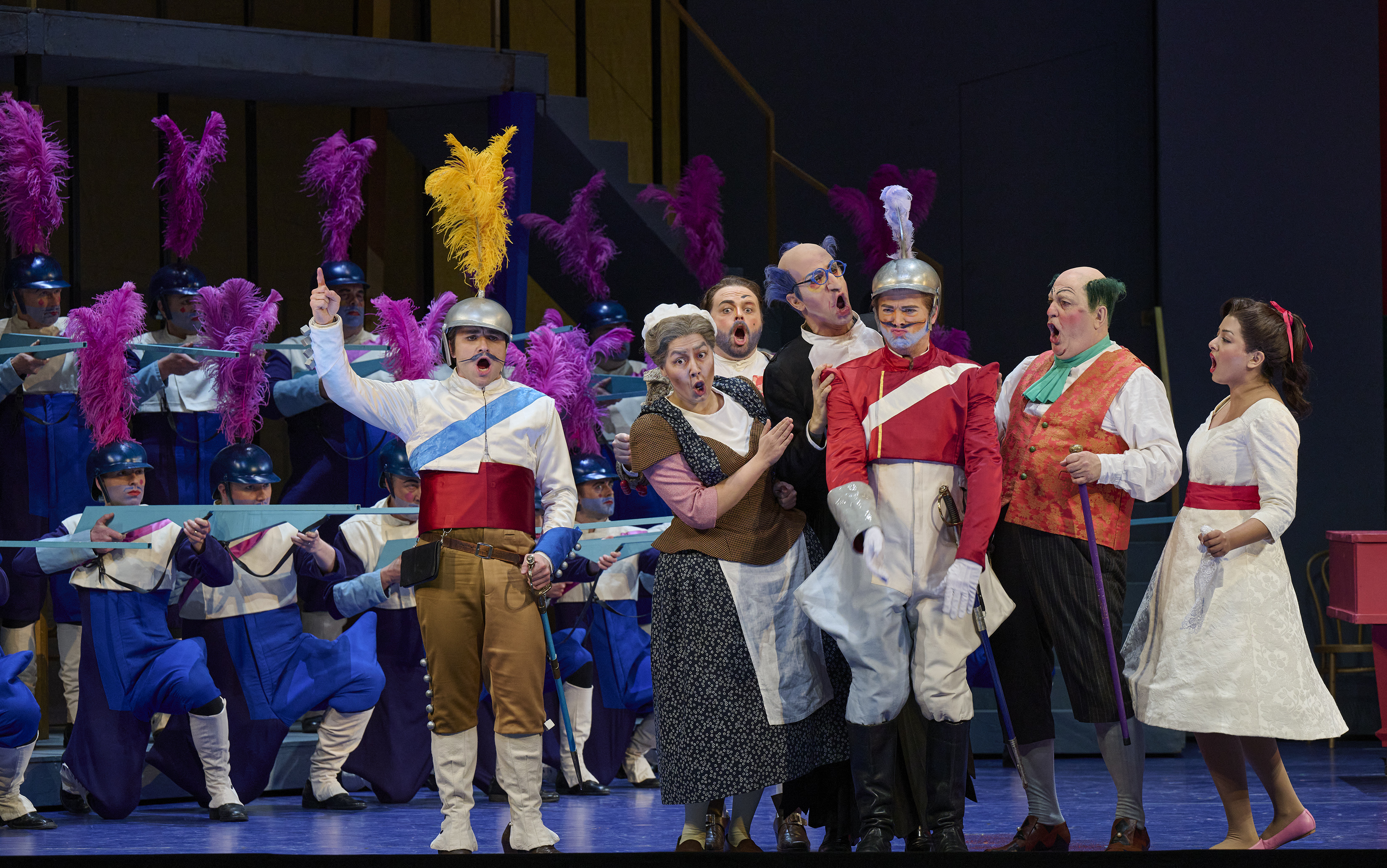
This show required a fair bit of physicality from the cast as a whole. I found that the more they all committed to the expressionist style of the movements, the freer their characters were as well as their voices. The choreography by associate director Xevi Dorca was stylized but still accessible. I found the COC Chorus, as always, excelled in its presentation of it, where a lot of the principal soli seemed to struggle with committing physically to movement fully. The Chorus sang well, but I felt at times they were a little out of sync with each other.
The staging overall didn’t shy away from singers facing or even delivering upstage and for the most part this was actually quite effective in helping provide a more 3D picture of the environment they were in. It really helped to flesh out the very 2D vibe the set and lighting design did so well. Other times it did mean singers may not have been in the best position to see the conductor for more important entrances and changes. Ironically on the flipside, I did find this production suffered a little from singers spending too much time looking directly at the conductor.
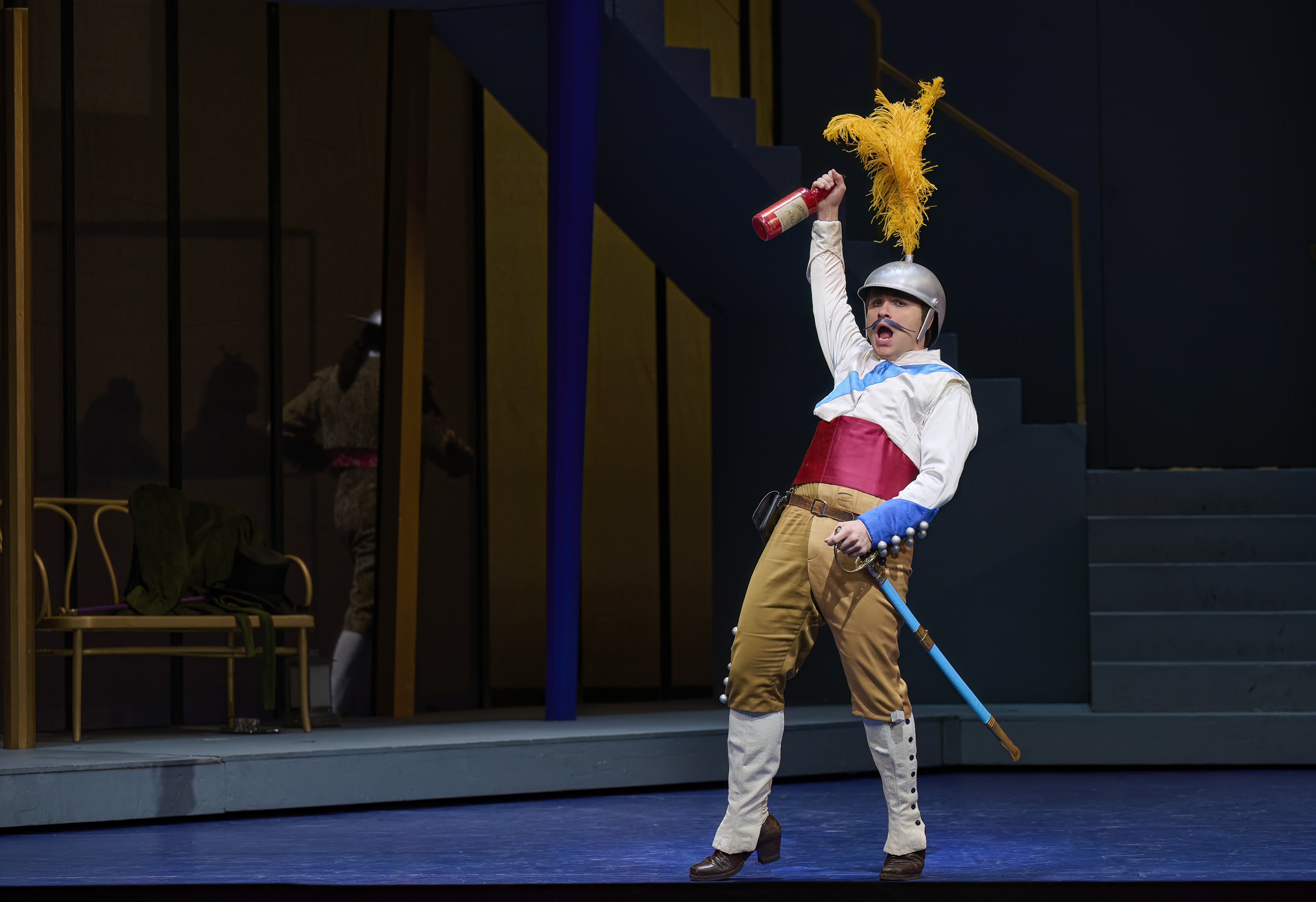
The Barber of Seville is always a hit. The tunes are legendary, the patter is top-notch, and the story is accessible and entertaining. This particular outing had some hiccups with pacing, but overall was very funny and extremely well-sung. If you’re a seasoned opera goer, you’ll be very entertained. If you’ve never been to the opera, this is a fantastic one to start with.
Comments