
Canuck Cantatas make the future look bright
Review
Hello, Schmop-Tops,
Against the Grain Theatre took back to the stage this past weekend at the Redwood Theatre in Toronto’s East End, and it felt good to have them back where they belong. Under the new Artistic Direction of librettist Royce Vavrek, and after an appropriate cancellation of Indians on Vacation, AtG is back with aplomb and continues its tradition of shaking things up.
I caught the closing performance of Canuck Cantatas, a collection of three short “scenas”. The pieces were commissioned by AtG in which composers and librettists were paired up to create some astonishing new works.
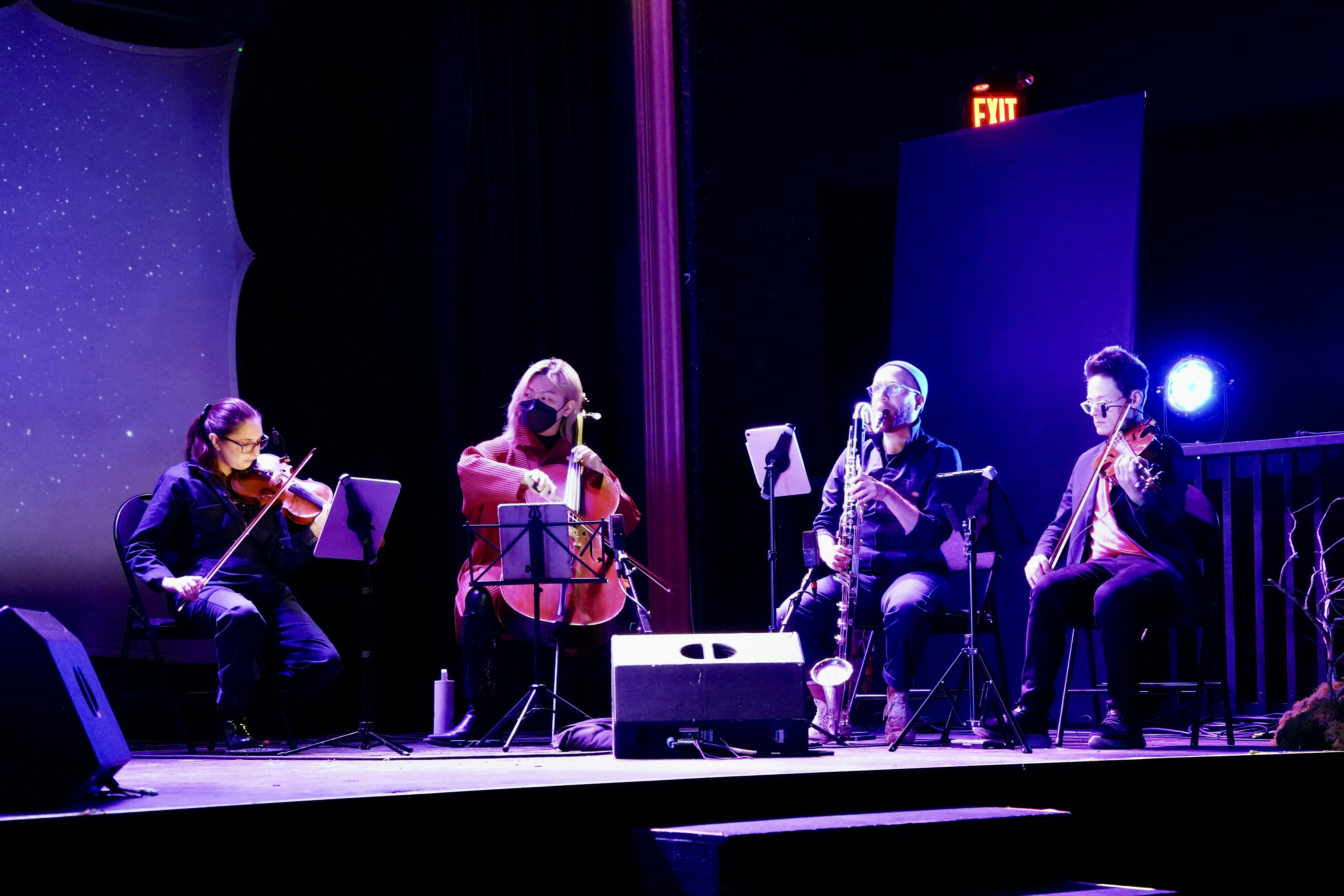
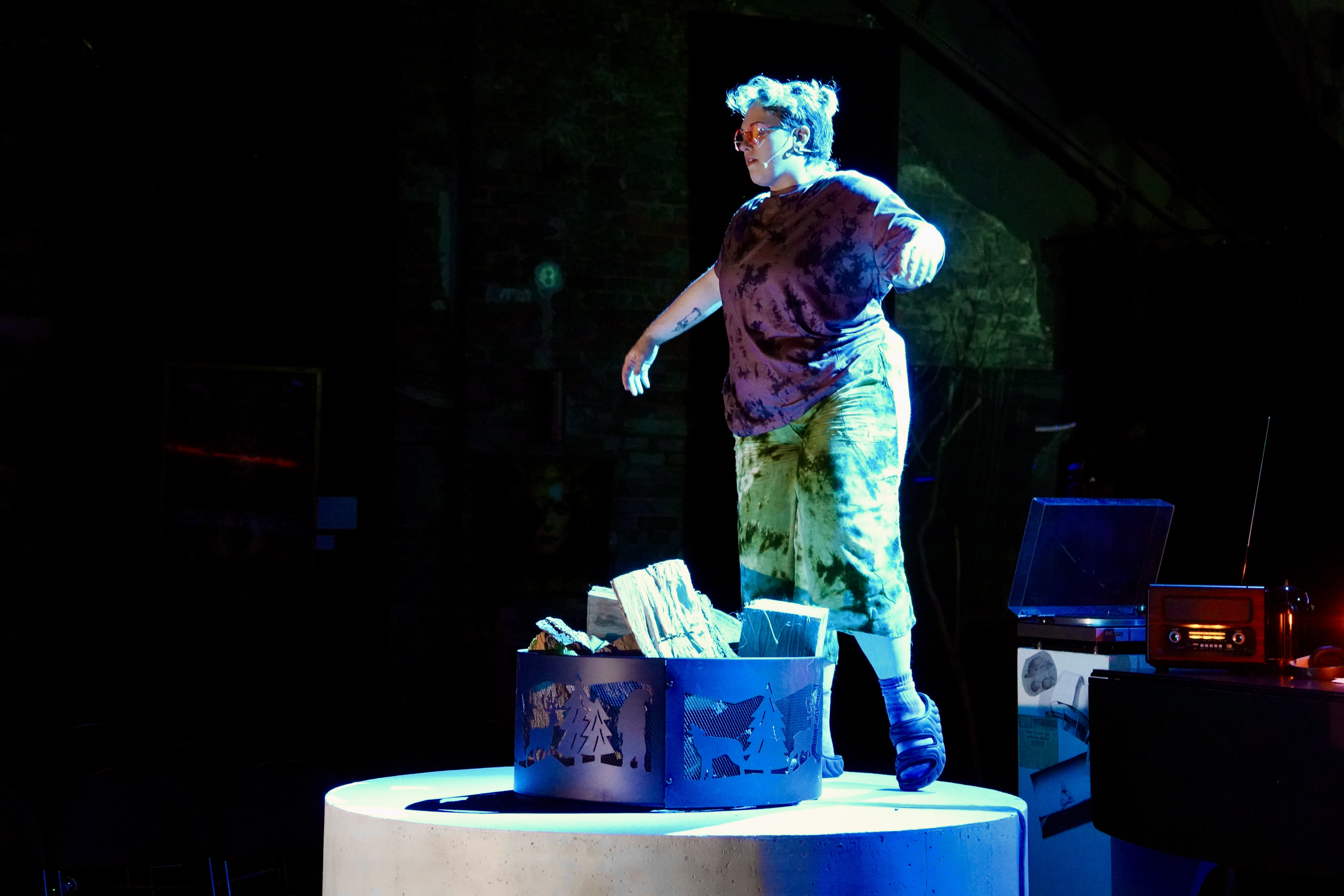
The show was directed by choreographer Jennifer Nichols; the overarching concept is one that is very familiar to the majority of Canadians: sitting around a campfire telling stories and making music. The show opens with a piano quintet rendition of the campfire classic “Fire’s Burning”, as we see the three supporting actors bring out their marshmallows and roasting sticks to sit and regale each other around the flames. Staged mostly in the round with a runway style thrust stage for the action and using the Redwood Theatre’s uniquely high stage for the orchestra and projections. Nichols showed a creative knowledge of space that not only ensures a full experience for the viewer, but also an ease and organic authenticity amongst the performers.
First up was “The Close Encounters of Faith Friesen” by Danika Lorèn (composer) and Vern Thiessen (librettist.) The story follows a recluse woman obsessed with making contact with lifeforms elsewhere in the universe. During a night shift at her radio station, we see her struggling with signals and frequencies while taking flights of fancy inspired by the 1969 moon landing. Performed by Lorèn with an ensemble of violin, cello, and bass clarinet, the music was simultaneously modern and unique while still remaining accessible. Sung in their usual fantastic soprano, we hear Lorèn really demonstrate the full range of colours available to in their arsenal. Thiessen’s libretto remained poetic while still allowing a world for Faith to be realized in full. I would really enjoy seeing this one fleshed out into a full-fledged opera. The concept is great and it can go in any number of directions and introduce all manner of interesting people who could interact with Faith.
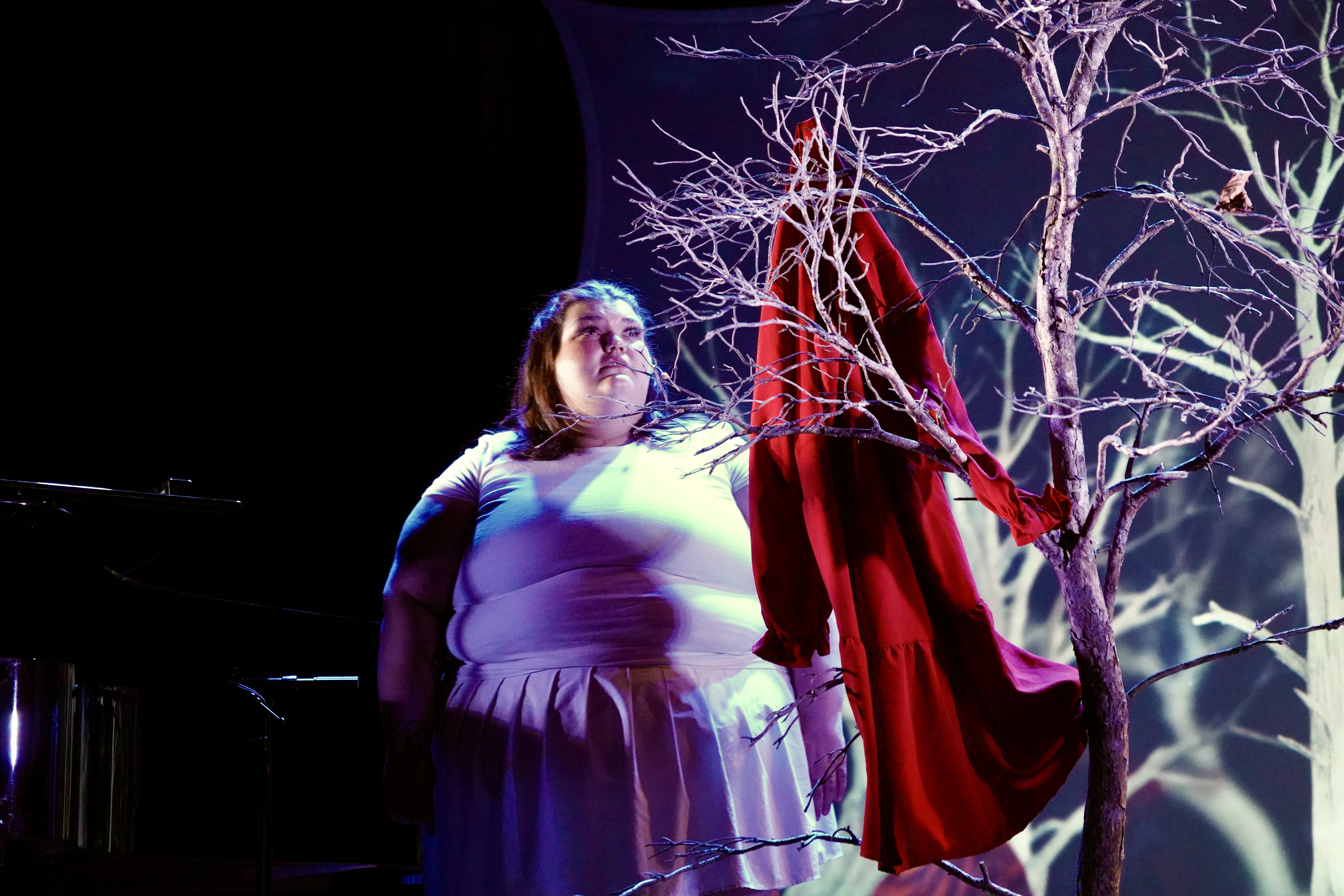
The second piece “Red Daughters” comes with a libretto from Emma Pennell. Pennell, of mixed settler and Mi’kmaw roots, brought a meditation on the journey of a young indigenous woman following the wish she sang to the trees when she was young to become a singer in the big city. Addressing the ongoing Missing and Murdered Indigenous Women and Girls (MMIWG) crisis, the piece is powerful in its message that, as the program notes state, “Not history, but a cycle still in motion.” This piece was composed by Music Director Spencer Kryzanowski in 48 hours after the original composer resigned suddenly. Kryzanowski more than rose to the task, setting Pennell’s text in a sensitive, tender, and engaging way. No sting was lost in the subject matter and the music sat gorgeously in Pennell’s stellar soprano. The piece was moving, emotional, and a piece everyone who identifies as a Canadian should see or hear at least once.
Our third instalment, “Kimberly Dunbar”, comes to us from Vavrek, with a score composed and sung by Canadian pop star Sarah Slean. “Kimberly Dunbar” is a woman with a mission to save her, and everyone else’s children, from the possibility of being exposed to LGBTQIA2S+ representation. We see her use the typical keyboard activist moments. Emails being sent, videos being posted online, even straight-up cold-calling her friends and neighbours. Slean’s score showed her prowess in songwriting for sure. She sang with a strong soubrette soprano and flexed some impressive vocal chops. Vavrek’s libretto was both funny and poignant in all the right places. Kimberly is never treated badly in this story, she’s just portrayed in a true way. She’s just a misguided mother trying to protect her babies.
Kryzanowski’s musical direction was clear and concise and the orchestra in all its iterations played extremely well in the venue. All the singers were microphoned for the show and it’s a choice I’m glad they made. I feel it gave the singers a chance to be far more nuanced in their musical choices. The ensemble played incredibly well and the whole production was supported beautifully with lighting and projections by Nathan Bruce.
If this show was any sort of glimpse of the direction Vavrek is planning to take AtG, then the future is looking bright. Not just for the Toronto opera-lyric theatre stage, but also for the future of new Canadian works in general. Each of these pieces worked remarkably well in their current iterations, but each could very well be fleshed out into what I think could be successful additions to the Canadian canon.
Comments